
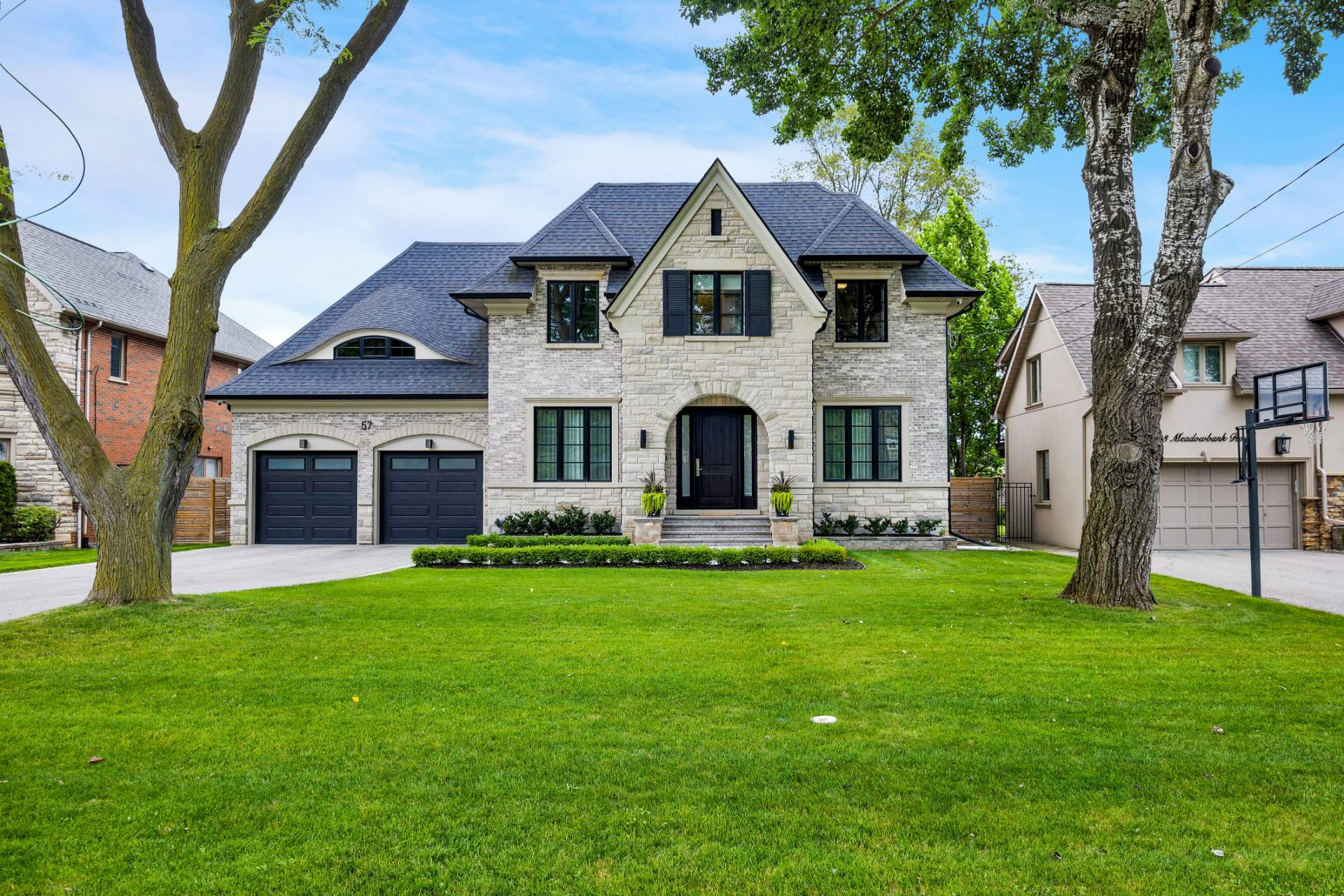
Almost every seller we meet has a number in their head for what the house is worth. Far fewer have a number for what it costs to sell it — and the gap between those two figures is the one that actually lands in your account.
This is the conversation we'd rather have early than late. Below is every cost that touches a Toronto home sale in 2026, what each one typically runs, which ones are negotiable, and which ones catch people by surprise. At the end there's a worked example on a $1,500,000 west-end sale so you can see how the arithmetic falls out in practice.
The short answer
For most Toronto sellers, all-in costs land somewhere between roughly 3.5% and 6% of the sale price. The spread is wide because the largest item — commission — is negotiable and varies, and because preparation costs depend enormously on the house. A well-maintained condo that needs nothing sits at the bottom of that range. A family home that needs paint, staging and a month of work sits nearer the top.
One thing that is not on your side of the ledger: land transfer tax. In Ontario the buyer pays it, and in Toronto the buyer pays it twice. It still matters to you — it's money the buyer has to find on closing that can't go into the price — but it isn't a seller's cost.
Commission — and the HST on it
Commission is the biggest line, and the one worth understanding properly. There is no standard rate in Ontario. No board, brokerage or regulator sets it. It's agreed between you and the listing brokerage in the listing agreement, and the total is normally split between the listing side and the brokerage that brings the buyer.
In the GTA, quoted rates commonly fall somewhere in the range of 3.5% to 5% of the sale price in total. What sits behind that number varies far more than the number itself — whether photography, video, floor plans, staging, print, pre-list preparation and paid media are included, or billed separately, or simply not done.
HST applies to commission at 13%, and it's a genuinely common surprise. On a $1,500,000 sale at a 4% total commission, the fee is $60,000 and the HST on top is $7,800 — so $67,800 leaves the table, not $60,000.
Worth asking any agent you interview: what is included at that rate, what is billed on top, and what happens to the fee if the property doesn't sell? The answers tell you more about the service than the percentage does.
Legal fees and disbursements
Every Ontario sale closes through a real estate lawyer. For a straightforward residential sale, legal fees typically run $1,200 to $2,500 plus HST, with disbursements — title searches, software and registration charges, courier, title insurance where applicable — usually adding a few hundred dollars on top.
Complications cost more, and they're worth flagging early: an estate sale, a property held in a corporation, a severance or a survey issue, a spousal release, or a title problem inherited from a previous owner. Bring your lawyer in before you sign the listing agreement rather than after you have an accepted offer.
Discharging your mortgage
Two separate costs live here, and only one of them is small.
The discharge fee — the lender's administrative charge to remove the mortgage from title — is typically a few hundred dollars in Ontario. Unremarkable.
The prepayment penalty is the one that hurts. If you're breaking a closed mortgage mid-term, the lender charges you for it. On a variable-rate mortgage that's usually three months' interest, which is manageable. On a fixed-rate mortgage it's the greater of three months' interest or the interest rate differential — and the IRD on a large mortgage taken at a high rate, being broken while rates are lower, can reach five figures.
Two ways to soften it: porting the mortgage to your next property, which most lenders permit if the purchase closes close enough to the sale, or timing the sale near the end of your term. Either way, call your lender for a written payout statement before you list. It takes ten minutes and it occasionally changes the plan.
Getting the house ready
This is the most variable line on the list and the one where the money is most clearly an investment rather than a cost. Typical items:
- Staging — from a light restyle using what you own, to full-house furnishing for vacant properties. Full staging in Toronto commonly runs $2,000 to $8,000 for a standard listing period, more for large or luxury homes.
- Photography, video, floor plans and drone — often included in the listing fee at the upper end of the commission range; billed separately at the lower end.
- Paint, minor repairs and deep cleaning — the single highest-return category, and rarely more than a few thousand dollars.
- Landscaping and exterior tidy-up — the first photograph most buyers see, and the first thing they see in person.
- A pre-list inspection — optional, roughly $500 to $800, and occasionally worth every dollar for the surprises it prevents mid-negotiation. Our questions to ask an inspector apply here too.
We'd rather spend a client's money here than almost anywhere else. Presentation is the part of the process with the clearest line to the final number.
Closing adjustments and the small stuff
On closing day your lawyer reconciles the things you've paid ahead or owe:
- Property tax adjustment — if you've prepaid past the closing date the buyer reimburses you; if you're behind, you pay the difference.
- Utilities and fuel — final meter readings, and for homes on oil, the fuel left in the tank.
- Condo maintenance fees — adjusted to the closing date. If you're selling a condo, you also order the status certificate, which is capped at a modest fee in Ontario. Our questions to ask before buying a condo covers what buyers will be reading in it.
- Toronto Vacant Home Tax — every Toronto residential owner must file an annual occupancy declaration. A missed declaration can result in the property being deemed vacant and taxed at 3% of its assessed value, and unpaid amounts attach to the property. This is a closing-day problem that is entirely avoidable in January.
- Moving costs — local moves in Toronto commonly run $1,000 to $3,500 depending on size and stairs.
- Bridge financing — if your purchase closes before your sale, expect interest plus a lender administration fee for the overlap.
Capital gains, and when you don't pay it
Most people selling the home they live in pay no capital gains tax at all. The principal residence exemption generally shelters the entire gain for every year the property was your principal residence — though the sale must still be reported on your return, which is a step people miss.
Where tax does arise:
- Investment and rental properties, and second homes. Half of the gain is included in income and taxed at your marginal rate. The proposed increase to a two-thirds inclusion rate was cancelled in 2025, so the 50% rate stands.
- Properties that were your principal residence for only part of the ownership period — the exemption is prorated.
- Properties sold within 365 days of purchase, which may be caught by the federal residential property flipping rule and taxed as business income, with the principal residence exemption unavailable. There are life-event exceptions.
- Non-resident sellers, who face a withholding requirement on closing until a clearance certificate is obtained — see below.
We're real estate advisors, not accountants or lawyers. The tax treatment of a sale turns on facts specific to you — how long you owned it, whether any of it was rented, whether you've claimed the exemption on another property. Before you sign anything on an investment property or a partly-rented home, talk to your accountant. We're glad to introduce you to one.
Three situations that change the maths
You're a non-resident of Canada
The buyer's lawyer is required to withhold a significant portion of the purchase price on closing until the seller obtains a section 116 clearance certificate from the CRA. Applications take time. If this applies to you, start with your accountant months before listing, not weeks.
The property has a rental unit
Ontario's Residential Tenancies Act governs what happens to an existing tenant, and a tenant with a valid lease generally has the right to remain after a sale. This affects both the buyer pool and the price, and it needs to be handled correctly rather than optimistically. The rules changed in 2026 — see our guide to Ontario's new landlord and tenant rules. If a garden suite or basement apartment is part of the property, its status and legality are part of the marketing story.
You're selling and buying at once
The costs stack: commission and legal on the sale, land transfer tax and legal on the purchase, and potentially bridge financing between the two. This is the scenario where sequencing matters most, and where an hour of planning at the start saves real money at the end.
Worked example — a $1.5M west-end sale
A detached family home in Etobicoke, owned for twelve years as a principal residence, sold for $1,500,000 with a fixed-rate mortgage being ported to the next property. Commission at 4% total.
| Cost | Amount | Notes |
|---|---|---|
| Real estate commission (4%) | $60,000 | Negotiable; split between brokerages |
| HST on commission (13%) | $7,800 | Not optional |
| Legal fees and disbursements | $2,400 | Straightforward sale, incl. HST |
| Mortgage discharge fee | $350 | Penalty avoided by porting |
| Staging | $5,000 | Occupied home, six-week term |
| Paint, repairs, deep clean | $4,500 | Highest-return spend |
| Photography and marketing | $0 | Included in the listing fee |
| Moving | $2,500 | Local move |
| Closing adjustments | $900 | Prepaid property tax, utilities |
| Capital gains tax | $0 | Principal residence exemption |
| Total cost of selling | $83,450 | ≈ 5.6% of the sale price |
| Net proceeds before mortgage payout | $1,416,550 |
Change three assumptions — commission at 3.5%, no staging needed, a fixed mortgage broken mid-term with a $14,000 IRD penalty — and the total moves to a little over $76,000. The point isn't the number. It's that the number is knowable in advance, and it should be on the table before you list, not discovered at the lawyer's office.
Common questions
How much does it cost to sell a house in Toronto?
For most sellers, total costs land between roughly 3.5% and 6% of the sale price once commission, HST on that commission, legal fees, mortgage discharge and preparation are counted. On a $1,500,000 sale that's roughly $60,000 to $95,000 — before any capital gains tax, which most owners selling a principal residence don't pay at all.
Does the seller pay land transfer tax in Ontario?
No — the buyer does. In Toronto the buyer pays it twice: once to the Province and once to the City through the Municipal Land Transfer Tax. It's still worth understanding as a seller, because it shapes what buyers can afford to offer. We break the whole thing down in our guide to Toronto's land transfer tax.
Is real estate commission negotiable in Ontario?
Yes. There is no standard rate and no body that sets one. Commission is agreed between you and the listing brokerage, and 13% HST applies to it. The more useful question is what the fee includes — preparation, photography, marketing reach and negotiation — because that's where the variance actually is.
Do I pay capital gains tax when I sell my home?
If it was your principal residence for every year you owned it, the principal residence exemption generally shelters the whole gain — though you still have to report the sale. Investment properties, cottages and partly-rented homes are taxable, with half the gain included in income at your marginal rate. Speak to your accountant about your specific situation.
What is a mortgage prepayment penalty?
The charge for breaking a closed mortgage before the end of its term. Variable-rate mortgages are usually three months' interest. Fixed-rate mortgages are the greater of three months' interest or the interest rate differential, which can be substantial. Porting the mortgage to your next home usually avoids it. Get a written payout statement from your lender before you list.
Should I sell first or buy first?
It depends on the market you're selling into and the one you're buying in, and on how much certainty you need. Selling first gives you a known number and a firm budget; buying first gives you the home you want and the risk of carrying two properties. In a market with more choice for buyers, selling first is usually the more comfortable order. It's a conversation worth having with real numbers rather than in the abstract.
Want your actual numbers, not an illustration?
Tell us about the property and we'll put together a net-proceeds estimate specific to your home, your mortgage and your timeline — no obligation, and no sales pitch attached.
Get a Home Valuation