
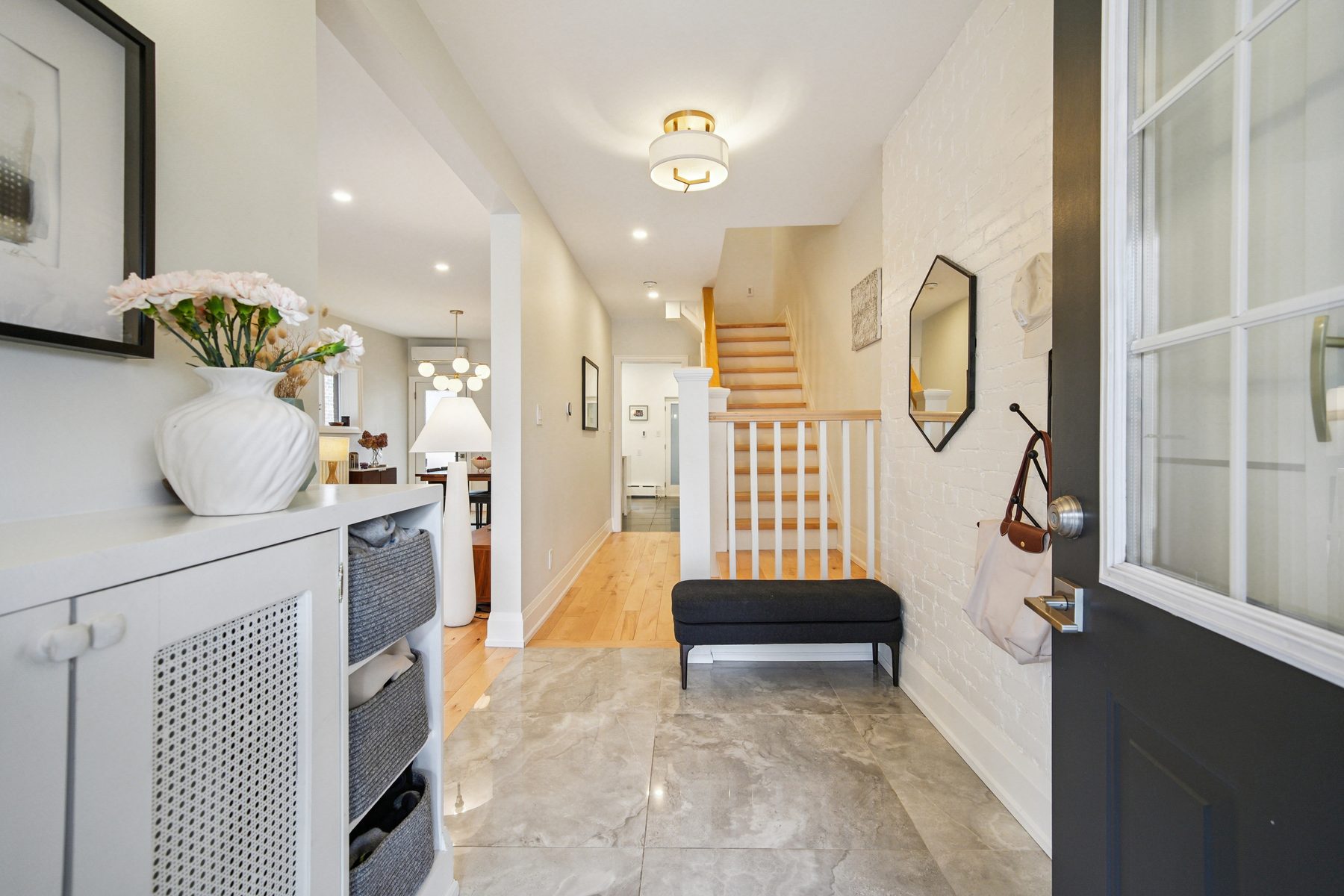
In a competitive market, the difference between a home that shows well and one that stands apart often comes down to how thoughtfully it is built.
One such advantage is a genuinely smart home — not a property equipped with a handful of individual "smart devices," but one wired, networked and integrated at the system level. Here is how a whole-house system differs from a DIY setup, why it matters for resale and lifestyle in the Toronto market, and how to approach it whether you are buying or selling.
What "smart home" means in real estate terms
A smart home is more than a thermostat you control from your phone. In practical terms, the right system can sharpen a home's appeal with a clear sense of modern living, add perceived value for technology-minded and luxury buyers, improve everyday comfort and efficiency, and give a listing a real point of difference — "a fully integrated smart system" rather than "some plug-and-play gadgets."
Whole-house system vs. DIY setup
The DIY setup
A do-it-yourself approach usually means buying individual devices — a smart thermostat, smart bulbs, a smart lock, a smart speaker — and installing them yourself. It is lower cost and can be rolled out gradually. The trade-offs are real, though: disparate apps, ecosystems that don't always talk to each other, limited automation and no central "brain." Each device may be excellent on its own while never working as a whole.
The whole-house system
A whole-house system is professionally designed and installed around a central automation platform. It integrates lighting, climate, security, audio-video, networking and window treatments, and presents unified control through a panel, touchscreen, app or voice. The differences that matter:
- Integration — arm "Away" and the lights turn off, the locks secure, the thermostat steps back and the shades close, together.
- Control and experience — one seamless interface across the home and on the go.
- Scalability and future-proofing — structured wiring and a stronger network backbone make upgrades smoother as standards evolve.
- Value and resale — higher-end homes increasingly expect this level of sophistication, and it is a genuine marketing point.
How these systems work
At the heart of any smart home is connectivity and control: devices connected over Wi-Fi or low-power protocols, a central controller, a reliable network (for larger homes, mesh Wi-Fi plus dedicated wiring), and automation logic — scenes, schedules and rules such as "after 6 p.m., when I arrive, unlock the front door, light the foyer and set the thermostat to 21°C." When that system is professionally installed, it becomes part of the home's infrastructure — structured cabling, a network cabinet, a dedicated controller — rather than a set of plugged-in gadgets.
Why it matters for resale
Buyers today expect convenience and connected living. A well-executed system supports the story of a meticulously presented, high-end home — exactly the standard we bring to every property we represent, such as our estate listing at 57 Meadowbank Road. It can improve comfort and efficiency, strengthen security, and differentiate a listing in a crowded market. The phrase "professionally installed whole-home automation" simply carries more weight than "some smart gadgets included."
When DIY makes sense — and when it doesn't
A DIY approach can be the right call for a smaller home or condo, a modest budget, or a short stay. It tends to fall short when you are preparing a property for the premium segment, planning to sell soon, or relying on reliability, scalability and centralized control across multiple systems. For homes in the upper-mid and luxury brackets, we recommend either a professionally installed system or, at minimum, ensuring the infrastructure — network, wiring, conduit — is ready for one.
Practical tips for buyers and sellers
- Confirm the home has strong Wi-Fi coverage and, ideally, wired connections to support a whole-house system.
- When renovating, run conduit or wiring for future expansion — shades, sensors, motors.
- If you plan to sell, favour a platform with broad third-party compatibility.
- Document the system clearly in marketing, and demonstrate it for prospective buyers.
- Match the system to the property — a simpler setup for a condo, multi-zone automation for a larger home.
Preparing a home for the market?
If you are considering upgrades before listing — or looking for a property that is genuinely smart-home ready — we would be glad to talk through the opportunities.
Our Selling Approach